

Artificial intelligence may help insurers process claims faster, assess risk and automate routine decisions. But putting these capabilities into practice requires something less visible: modern technology infrastructure capable of connecting data, software and day-to-day operations.
That challenge is shaping the next phase of digital transformation in the property and casualty (P&C) insurance industry. As companies explore AI applications, they must also address the legacy systems and fragmented workflows that can limit their ability to deploy new technologies at scale.
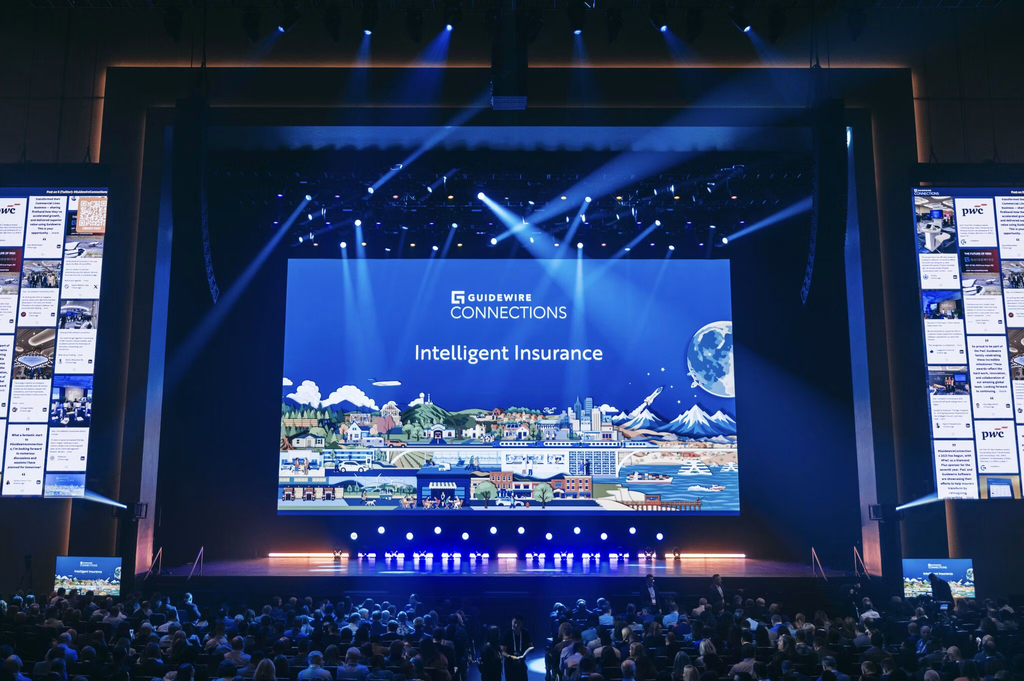
Guidewire is bringing that discussion to its annual Connections conference, scheduled for October 26–29 at the Fontainebleau Las Vegas. The company expects more than 3,800 attendees from the insurance, technology and partner communities.
The event will examine how insurers can combine AI with cloud platforms and industry-specific software to improve operations across the insurance lifecycle. Guidewire’s approach focuses on AI capabilities designed for P&C insurance, including tools that help agents recommend actions, generate content and automate decisions using insurance-specific context.
The distinction is important in an industry where decisions affect financial exposure, customer coverage and claims payments. AI systems must operate within established processes while meeting requirements for data quality, security and regulatory compliance.
Core modernization becomes an AI priority
For insurers, adopting AI is not simply a matter of introducing another software application. Underwriting, pricing and claims management depend on information distributed across multiple systems, some of which were not designed to support modern AI workloads.
Moving these operations forward can require cloud migration, better data integration and changes to existing technology architectures. Without that groundwork, individual AI projects may remain isolated rather than becoming part of broader operational improvements.
Guidewire Connections 2026 will bring together industry executives and technology specialists to discuss these challenges. The announced speakers include Randy Termeer, president of the Property and Casualty Group at USAA, and Natalie Simms, vice president of Operations & Modernization at TD Insurance. Author and AI journalist David Epstein is also on the program.
The event will take place as insurers evaluate where AI can deliver measurable value, from reducing manual work to improving the efficiency of existing processes. The central question is how to move from experimentation to deployments that can operate reliably across an organization.
Technology consultancies are also part of that transition. GFT Technologies Canada, a Guidewire consulting partner, works with insurers on core-system modernization, cloud transformation and AI-related applications. André Gagné, CEO of GFT Technologies Canada, is among the company’s representatives attending the conference.
The broader shift suggests that AI adoption in insurance will depend on more than the capabilities of individual models. Connecting those capabilities to core systems, reliable data and established business processes will be essential as insurers seek to turn technological experimentation into operational change.