



Milan, Italy – Switzerland is using this year’s Winter Olympic Games in northern Italy to pitch its expertise in wearables, training tools, and equipment designed to elevate performance.
Meanwhile, elite athletes are turning to Swiss innovations for a competitive edge, fueling the country’s rise as a hub for sport tech entrepreneurs; researchers and startups already count an Olympic medalist in Alpine skiing and national ice hockey players among those who’ve benefited from their developments.
Supporters argue the country is uniquely positioned to lead the growing sport tech sector that spans products and platforms for athletes, fans, and teams. They cite advantages such as top research universities, easy access to the Alps, and the presence of major sports organizations, including the International Olympic Committee headquarters.
“The quality of our academic landscape and the culture of collaboration between the private and public sectors make Switzerland an ideal place to experiment with new solutions from which the whole world can benefit,” Swiss President Guy Parmelin said at a February event focused on sport tech held by the government of Switzerland in Milan.
‘Entrepreneurs and Athletes’
Swiss officials buoyed sport tech on a global stage, using the House of Switzerland in Milan—the country’s public presence at the Olympics—to showcase technology such as sensors that provide real-time feedback to ski jumpers and an ice hockey shooting simulator.
President Parmelin visited the displays and called the sector a natural fit for a country “made up of entrepreneurs and athletes.”
“We see that the private sector and the sports community have excellent cooperation, and I commend this spirit,” Parmelin told 150sec at the press conference. “I hope it continues; it’s extremely important.”
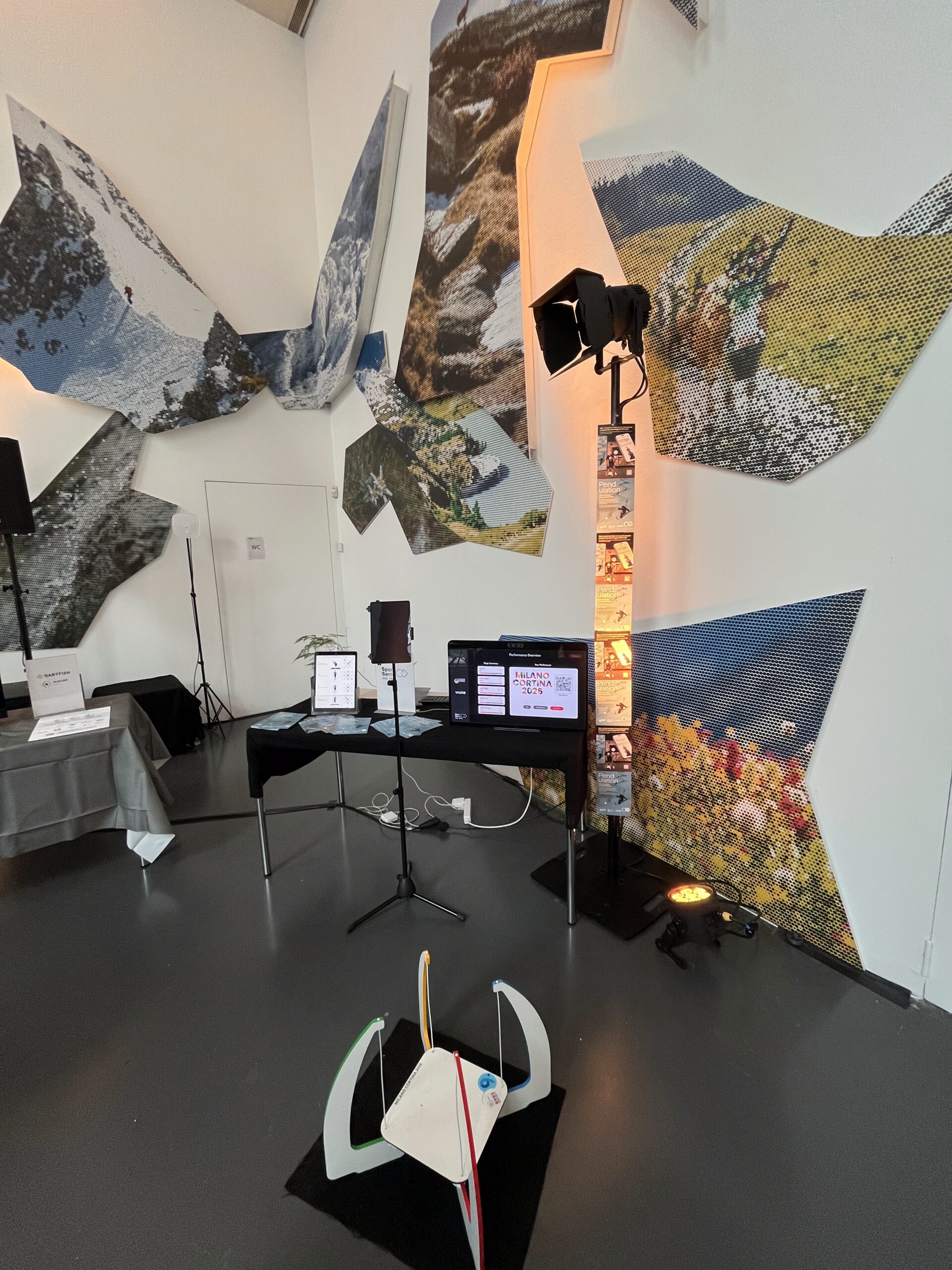
Switzerland’s Federal Council decided in 2023 to use the country’s presence at the Olympics and Paralympics this winter to promote innovation and cutting-edge companies to political and business leaders as well as the general public. The country plans to similarly highlight its tech sector at the 2028 Summer Olympic and Paralympic Games in Los Angeles.
The Swiss sport tech ecosystem benefits from an athletic population and proximity to the slopes, said Alexandre Edelmann, head of Swiss governmental organization Presence Switzerland, in an interview with 150sec. Presence Switzerland promotes the country’s global image and is responsible for implementing the nation’s communication strategy abroad.
The Olympics provide a massive platform to celebrate not only sports but the researchers and companies that contribute to them, Edelmann added. “We are a mountain country, so basically, we have living labs.”
Potential for Growth
Sport tech entrepreneurs can leverage other factors, including support from the Swiss innovation agency and the country’s venture capital market, Edelmann said. Venture capitalists invested $2.95 billion Swiss Francs ($3.83 billion USD) in Swiss startups across sectors last year, according to a report by Startup Ticker and the Swiss Private Equity & Corporate Finance Association.
Spinoffs from Swiss universities are part of that landscape. The École Polytechnique Fédérale de Lausanne (EPFL), a public research university, has a sport tech initiative that includes dozens of labs for research and projects related to sports.
“We have a very direct connection with elite athletes, and so we can know what they need,” Ambrogio Fasoli, vice president for academic affairs at EPFL, told 150sec. “We have a system where we have a lot of help for the young startups from our academic environment, but also from the government.”
Bearmind, a startup featured at the Swiss event in Milan, is an EPFL spinoff. The company develops helmet sensors for sports such as ice hockey to monitor head impacts and manage the risk of brain injuries.
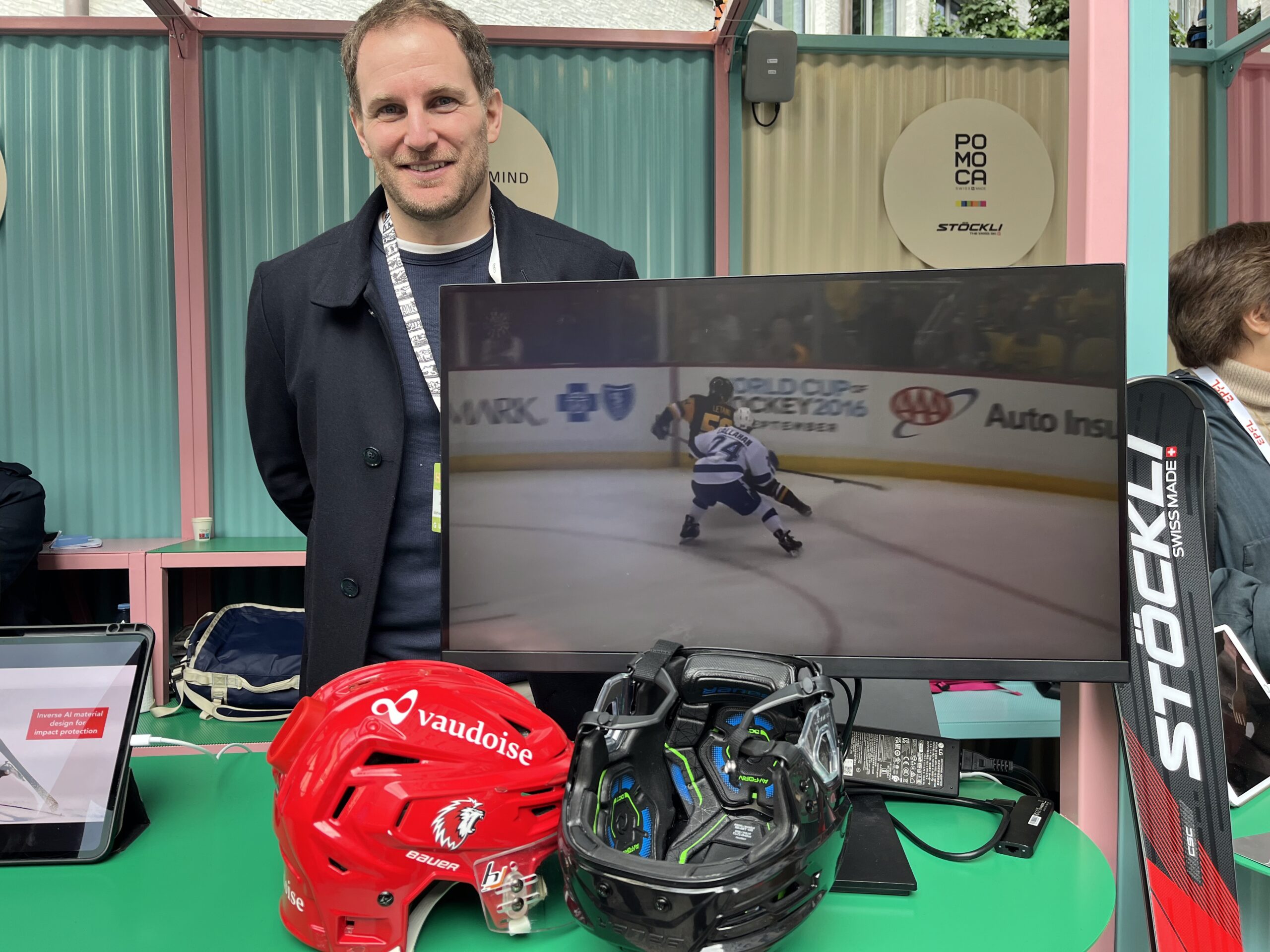
“Switzerland has a huge potential for sport tech,” Mathieu Falbriard, Bearmind CEO, noted in an interview. “We have everything we need.”
Sport tech ventures can draw from university talent and easily work with different teams and partners throughout Switzerland without traveling long distances, Falbriard said. Switzerland can be viewed as a small market, though, which is a challenge when talking to investors, he said.
“We could really be better at promoting what we do,” Falbriard said.
Featured image: Courtesy of Brenna Goth.