Lithuania may not yet be on your radar as a space hub, but the Baltic country is building on its strengths to make sure it is established as such.
Ever since it launched its first two satellites in 2014, Lithuania has taken significant steps toward developing its space sector. The country joined the European Space Agency (ESA) as an associate member in 2021, hosts an ESA Business Incubation Centre, and adopted an ambitious strategy to go after a share of the global space sector, which is expected to triple in value by 2033.
In a clever marketing stunt to literally put itself on the map, Lithuania’s capital city installed temporary signs pointing toward the International Space Station ahead of the 2025 Vilnius Space Days in May.
Despite its name, the gathering was actually a one-day event bringing together experts, industry representatives and policymakers to discuss the path forward for the country’s space industry.
One obvious challenge is that Lithuania’s space sector is small, with some 30 Lithuanian companies currently participating in the space supply chain. However, the country is aiming for fast growth, with hopes to nearly triple this number to 85 companies within five years.
This means that new entrants will have to join the ranks of more established companies like NanoAvionics, of which Norway’s Kongsberg Defence & Aerospace acquired a 77% share in 2022, and which was awarded a €122.5 million contract to build a 282-satellite constellation.
In a country the size of Lithuania, contracts of this size quickly add up, making the bold goal of the space sector reaching 1% of GDP by 2027 feel within reach — especially if it keeps on leveraging expertise gained in other verticals. Let’s explore.
Engineering talent
Unlike other, bigger countries, Lithuania doesn’t claim it can do it all. Hence its branding as a country “open for co-creation.” When it comes to space, it means aiming to have agile companies that can focus on specific pieces of the puzzle, also taking advantage of local talent.
“Lithuania has the potential to excel in digital engineering solutions for space systems, including generative engineering and digital twin technologies,” Lithuanian entrepreneur Juozas Vaicenavičius said in a statement.
His company, Sensmetry, enables the creation and use of these digital twins, which he sees as a necessary answer to the increasing complexity of modern space systems, combined with the requirement for these systems “to be built faster, cheaper, and perform more reliably than ever before.”
While this means that Lithuania can bring software talent into working for space applications, the country has manufacturing chops, too.
The land of lasers
There is one field in which Lithuanians have particularly excelled: light-based technologies. “Lithuania is the land of lasers,” Aktyvus Photonics CEO Laurynas Šatas told this reporter. This was true under the Soviet Union, remained true when the country regained its independence, and is now flourishing with space applications, too.
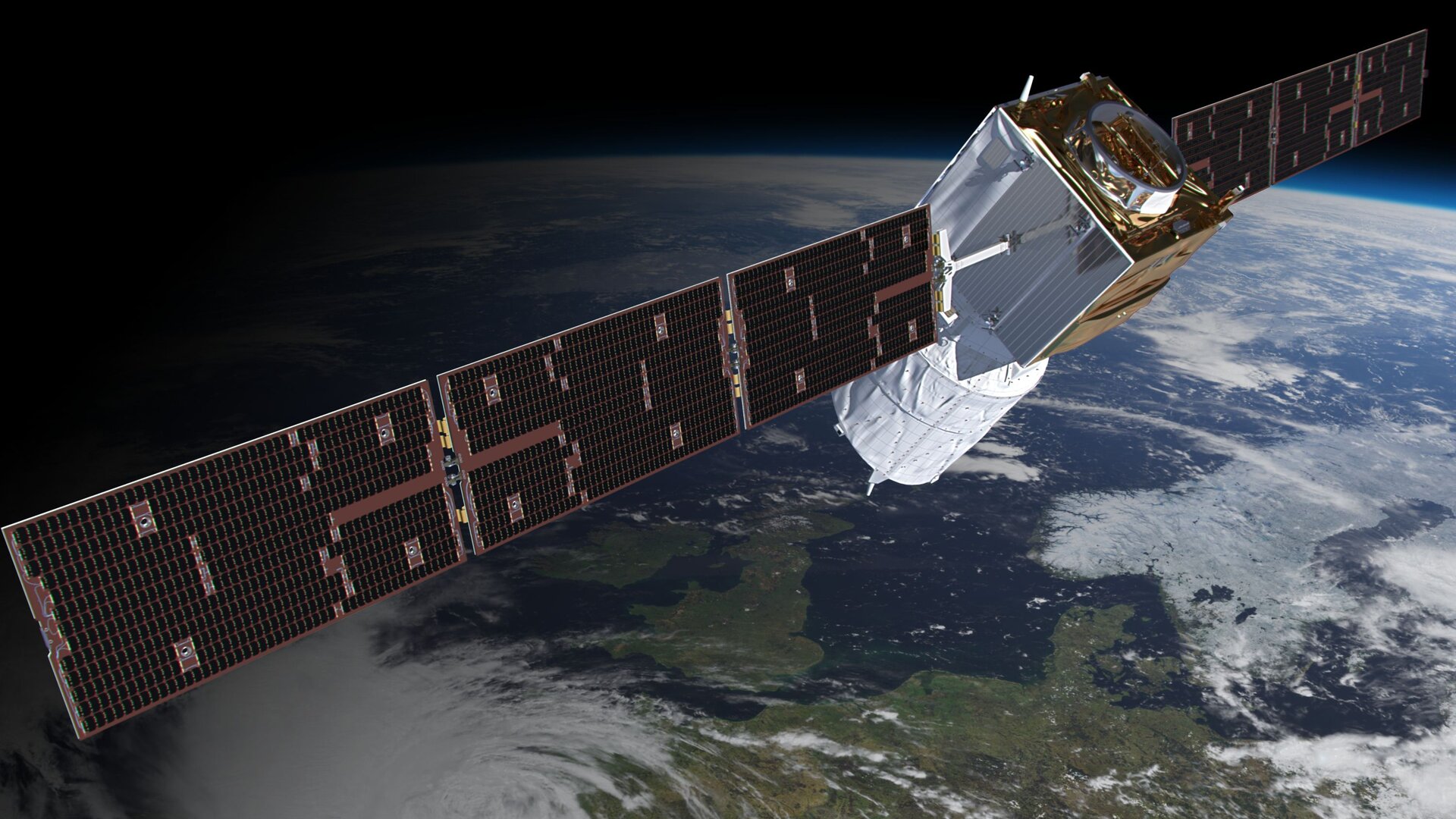
According to the official development agency Go Vilnius, the city’s laser cluster has already contributed components to ESA missions, including the Aeolus satellite, whose images of wind helped improve weather forecasts and projections.
One example is Astrolight, a Vilnius-based startup founded in 2019 whose advanced laser communication systems can have several applications, from enabling secure, high-speed links for naval and defense operations to “bridg[ing] the connectivity gap between space and Earth.”
Dual-use potential
In 2024, Astrolight was part of the cohort of companies selected by NATO’s Defence Innovation Accelerator for the North Atlantic, also highlighting the dual use potential that characterizes many Lithuanian startups.
For instance, Blackswan Space is developing autonomous satellite navigation and in-orbit servicing technologies with applications in both commercial operations and defense systems.
Venture capitalists have woken up to funding these defense-related innovations, but Lithuania is also going upstream and supporting space technologies. In the view of Eglė Elena Šataitė, Head of dedicated support agency Space Hub LT, these are “enabling technologies.”
“Without space innovations, there are no defense innovations—no new, groundbreaking technologies that can ensure European security and non-dependence, economic stability and betterment of societies,” she argued.
Life beyond Earth
The way in which space can improve life on Earth is often beyond what most people imagine. Take Delta Biosciences, for example, which recently secured a contract with the ESA to test radiation resistance and long-term efficacy of drugs.
“The results of the mission will not only benefit astronauts but also cancer patients, emergency response teams, and people in hard-to-reach locations on Earth,” cofounder Dominykas Milašius commented at the time.
From life sciences to software and lasers, Lithuanian talent is determined to help the country’s space sector take off, and it could happen sooner than you’d expect.
Disclosure: Invest Lithuania covered Anna Heim’s travel costs to attend the Baltic Miltech Summit, of which Vilnius Space Days were a side event. None of these had any involvement in the decision to write this article or in its content.