


The European Union has put forward two policies that both reach founders running technology companies at the scaleup stage.
One is a growth fund that has been investing in European companies since the summer, and the other is EU Inc, a proposed company form that would let a business register once and operate in every member state under one set of company rules.
Read more: EU make a move to streamline company rules with EU Inc. framework
The fund has already taken part in some of the largest funding rounds in European tech this year, while the company law has yet to pass its first committee vote in the European Parliament. As a result, a founder choosing where to incorporate today has access to European capital but not yet to a European legal structure.
How the Scaleup Europe Fund invests
The Scaleup Europe Fund is managed by the Swedish investment firm EQT and is part of the European Innovation Council Fund, the EU’s vehicle for taking equity stakes in technology companies. It aims to reach about €5 billion, and the Commission has committed €1 billion of that, backed by Horizon Europe, the EU’s research and innovation programme.
Read more: Europe bets €40 million to commercialise university research through the EIT
Its other founding investors include Novo Holdings, the Danish export fund EIFO, Allianz and the Dutch pension investor APG, and EQT is still raising the remaining capital.
The fund invests from the Series B stage onward—the round that usually follows once a company has shown its product has customers and needs money to expand—and its investments start at €100 million, a figure that includes follow-on investments in companies it already backs.
Scaleup Europe invests on commercial terms, meaning it selects companies and prices its stakes to earn a financial return as a private investor would, with EQT making investment decisions independently from the Commission and the other investors, while the EU says it created the fund to also reduce relocation risks such as companies moving abroad, falling under foreign control or losing talent to other regions.
The fund’s largest deal so far was in September, when it co-led Mistral’s €3 billion round with PSG Equity. Samsung Electronics led that round, which gave the French AI company a post-money valuation—a value that includes the new capital—of more than €21 billion.
Read more: France’s Mistral AI raises €3 billion in Europe’s largest tech funding round
A growth equity review by the investment bank Rothschild & Co lists other investments by the fund, including Swedish software company Lovable’s $400 million Series C, a Series F round for Finnish satellite radar company ICEYE, and a $450 million Series C for space company The Exploration Company. They also include a $100 million Series B for Swedish health technology company Tandem Health.
What the fund asks of the companies it backs
Companies that take the fund’s money accept conditions on where their value stays. In the EU’s own description, stakeholders specified that the fund commits to making sure that most of the value its companies create, including their intellectual property, remains in the EU or in countries associated with Horizon Europe, which have signed agreements to take part in the EU research programme, like Norway, Switzerland and the United Kingdom.
The fund favours European exits, meaning sales to European buyers or listings on European stock exchanges, and its investment guidelines include economic security safeguards. For now, for example, the fund can put no more than 5% of capital into UK companies, although that limit is open to negotiation.
Eligibility works in a similar way, since the fund accepts companies located in, or planning to move to, an EU member state or a country associated with the innovation pillar of Horizon Europe.
The fund’s public documents do not say how the share of value created in Europe will be measured, or what happens if a company later moves its intellectual property abroad, and the terms of individual investments have not been published. This leaves the practical meaning of the conditions to each investment agreement, which founders only see when they negotiate with the fund.
Why the EU Inc. vote keeps slipping
EU Inc is meant to give those same companies a legal structure that works in every member state. The Commission proposed it on March 18 as an optional company form that would exist alongside the 27 national company laws. It is actually also known as the “28th regime”.
Registration would be online, take up to 48 hours and cost no more than €100, with no minimum share capital. The Commission wants a final deal by the end of 2026, reached through trilogues, the negotiations between Parliament, Council and Commission that settle the final text of EU laws.
Those negotiations, however, cannot begin until Parliament adopts its own position, and its Legal Affairs Committee scheduled two votes in October, both of which were cancelled.
The groups disagree over employee participation, the right of employees to elect or appoint some members of a company’s board. This right is required by law in some countries, such as Germany, once a company employs a certain number of people, while other countries have no such rule.
The Commission’s proposal ties an EU Inc to the participation rules of the country of its registered office. Unions and centre-left MEPs therefore fear that founders could register in a country without these rules, even if most of their staff work in a country that has them.
Business-friendly lawmakers argue that applying several national systems to the same company would make the form too complicated to use. A third attempt was expected for November 4 or 5, but an independent EU Inc. tracker, updated on November 2, shows the file was not on the committee’s draft agenda for those meetings.
The next committee meetings listed are on December 3, 7 and 10.
What member states have removed from EU Inc.
While Parliament has been stuck, member states agreed on their own version of the text on October 23. Their negotiating position drops the central EU register the Commission had proposed, which the EU-INC campaign had asked lawmakers to keep, and also allows member states to delay or refuse a registration on money laundering or terrorist financing grounds.
The same text deletes the chapter on insolvency and gives member states 21 months after the regulation enters into force to start applying it.
A further change concerns employee stock options. The Commission had proposed deferring tax until employees dispose of the shares they obtain from their options, but the Council keeps that rule only for companies with fewer than 750 employees and turnover of no more than €150 million at the time the options are issued.
The EU-INC campaign, which reports more than 26,000 supporters, treats the register and the stock option rule as provisions that decide whether founders will use the new form. In a September open letter, its backers called for a single central registry and for employees to be taxed only when they dispose of their options, warning that EU Inc. could become “unusable if its central features are weakened.”
Stéphane Séjourné, the Commission’s Executive Vice-President for Prosperity and Industrial Strategy, has said the regime cannot work without harmonised stock options. In October the campaign published an urgent appeal to Europe’s prime ministers, stating that “months of negotiations have hollowed out the EU Inc. proposal”, and asking them to step in.
How the two policies affect the same companies
The stock option thresholds show most clearly how the fund and the company law reach the same businesses: the fund backs companies at the stage when they are growing fastest, while the Council’s tax rule applies only to companies below 750 employees and €150 million in turnover when the options are issued.
Any company that grows past either limit with the fund’s capital would therefore lose the deferred tax treatment for the options it issues from then on, even though equity is one of the main ways these companies recruit and keep staff.
If the Council’s version becomes law, the companies Europe finances directly could lose the harmonised tax treatment for employee equity, although equity is one of the main ways these companies recruit and keep staff. The question of U.S. incorporation sits on top of this.
TechCrunch reported in September that founders behind unicorns including Alan, ElevenLabs, Lovable, Mistral and Synthesia have endorsed the campaign, and that some of these companies have their headquarters in the U.S. It read the campaign’s message to lawmakers as being that a well-designed EU Inc. could bring that pattern to an end.
Since the fund’s eligibility rules also cover companies intending to locate in Europe, a business based outside the bloc that decided to move today would have to register under one of the 27 national company laws, as EU Inc. does not yet exist.
Where a founder can incorporate this winter
A founder deciding this winter where to incorporate has to work with what Europe offers today rather than with what it has proposed.
The Scaleup Europe Fund can invest €100 million or more in a company that agrees to keep most of its value and intellectual property in Europe. The single company form that would let that company operate across the bloc under one set of rules still has several stages ahead.
Importantly, Parliament first has to agree its position, then the three institutions have to negotiate a final text, and under the Council’s version, member states would have up to 21 months to apply it.
Until those stages are complete, every company that accepts the fund’s money will grow under the national law of the country where it is registered. It will be bound by that country’s rules on employee participation and on the taxation of stock options, which are the issues EU Inc. was designed to settle at European level.
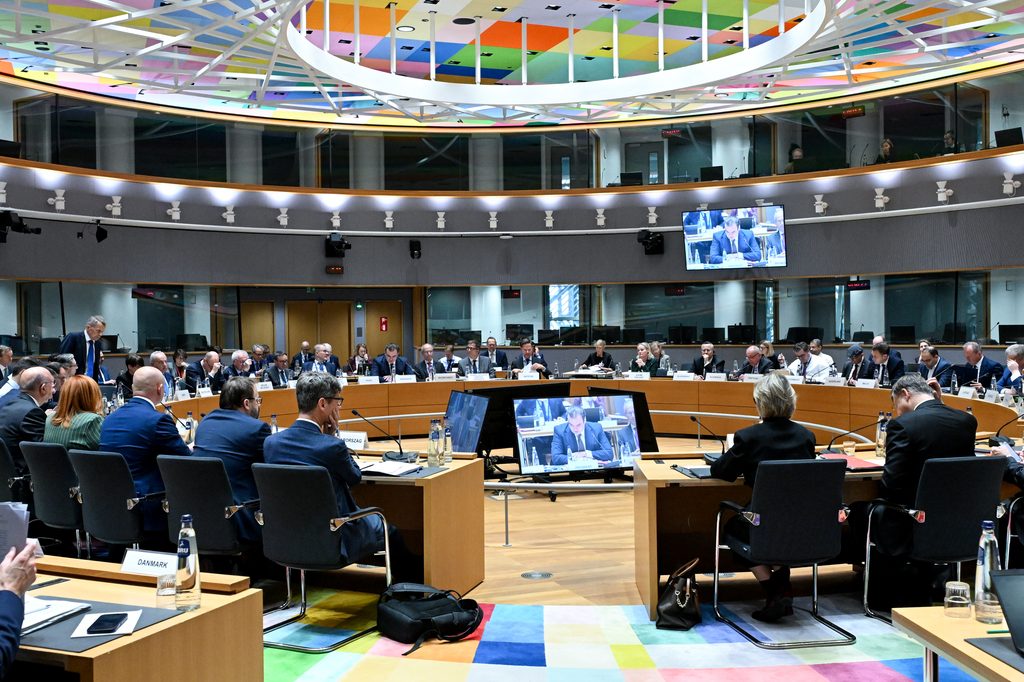
Featured image: Roundtable (inclusive format), 09/11/2026
Via European Council Newsroom